Categories
Leadership & Governance

Implementing Key Performance Indicators (KPIs): Templates for Cybersecurity Governance

Cybersecurity performance should be measured with clear, objective indicators—not just ad hoc updates or reactive reporting. While IT leadership often bears the burden of communicating cyber risk, boards and executives need structured, strategic insights to make informed decisions—especially during a crisis.

Key performance indicators (KPIs) help organizations:

  • Track progress toward cybersecurity goals.
  • Evaluate the effectiveness of training, insurance coverage, and incident response.
  • Benchmark performance using recognized standards such as NIST, COBIT, ISO 27001, and CIS.

Dashboards that consolidate and visualize these KPIs over time support better governance, resource allocation, and strategic planning.


What Should Cybersecurity KPIs Measure?

KPIs should be relevant, reader-friendly, and designed to convey meaning, highlight change, and enable dialogue. Recommended categories include:

  • Security Incidents: Frequency, severity, and trends.
  • Mean Time to Detect (MTTD) and Mean Time to Respond (MTTR): Indicators of monitoring and response effectiveness.
  • Vulnerability Management: Number of vulnerabilities identified, severity ratings, and remediation timelines.
  • User Awareness: Training completion rates, phishing simulation results, and incidents caused by user error.
  • Compliance Metrics: Audit results, system alignment with standards, and resolved violations.
  • Budget Allocation: Spending breakdowns, comparisons with peer organizations, and funding gaps.

These metrics should be presented in concise, visual formats that support decision-making without overwhelming non-technical audiences.


14 Cybersecurity KPIs to Track in Vendor Risk Management

To demonstrate vendor risk management efforts, organizations should track these 14 KPIs. Each is framed as a question to guide performance improvement and stakeholder reporting.

1. Level of Preparedness

How well is your organization equipped to prevent, detect, and respond to threats?
Includes metrics like:

  • Number of incidents resolved.
  • Frequency of phishing simulations.
  • Patch coverage and backup testing.
  • Security awareness training participation.

2. Unidentified Devices on Internal Networks

How many devices are untracked or unauthorized?
Includes:

  • Asset inventory accuracy.
  • IoT and BYOD security.
  • Rogue access point detection.

3. Intrusion Attempts

How many unauthorized access attempts were blocked?
Includes:

  • IDS/IPS performance.
  • Firewall logs.
  • Investigation and escalation timelines.

4. Security Incidents

What types of incidents occurred and what was their impact?
Includes:

  • Incident frequency and resolution time.
  • Root cause analysis.
  • Downtime and financial impact.

5. Mean Time to Detect (MTTD)

How quickly are threats identified?
Includes:

  • Average detection time.
  • Alert triage and prioritization.
  • False positive/negative rates.

6. Mean Time to Resolve (MTTR)

How long does full remediation take?
Includes:

  • Response coordination.
  • Root cause identification.
  • Restoration and stakeholder communication.

7. Mean Time to Contain (MTTC)

How fast are threats isolated?
Includes:

  • Containment effectiveness.
  • Cross-department coordination.
  • Reduction in incident frequency and cost.

8. First-Party Security Ratings

What is your organization’s current security score?
Includes:

  • Benchmark comparisons.
  • Rating trends.
  • Improvement actions.

9. Average Vendor Security Rating

How secure are your vendors?
Includes:

  • Vendor tiering and reassessment.
  • Rating systems and monitoring.
  • Communication of issues.

10. Patching Cadence

How frequently are patches applied?
Includes:

  • Patch prioritization.
  • Legacy system management.
  • Patch validation and exceptions.

11. Access Management

How well is access to sensitive systems controlled?
Includes:

  • MFA implementation.
  • Privileged account controls.
  • Access audits and training.

12. Company vs Peer Performance

How does your security posture compare to peers?
Includes:

  • Benchmarking KPIs.
  • Competitive intelligence.
  • Strategy alignment.

13. Vendor Patching Cadence

Are vendors patching vulnerabilities promptly?
Includes:

  • Scan frequency.
  • Remediation tracking.
  • SLA enforcement.

14. Mean Time for Vendor Incident Response

How fast do vendors respond to incidents?
Includes:

  • MTTR tracking.
  • Coordination and communication.
  • SLA monitoring.

Best Practices for KPI Implementation

  1. Align KPIs with Strategic Goals
    Ensure indicators reflect organizational priorities and risk appetite.
  2. Use Recognized Standards
    Benchmark against frameworks like NIST CSF, ISO 27001, and CIS Controls.
  3. Automate Data Collection
    Use tools that integrate with existing systems to streamline reporting.
  4. Update Dashboards Regularly
    Maintain relevance by refreshing data and adjusting metrics as threats evolve.
  5. Tailor Dashboards to the Audience
    Provide executive summaries for leadership and detailed views for technical teams.
Categories
Planning & Policy

Cyber Framework Comparison: Choosing the Right Path for Your Organization

Selecting and implementing a cybersecurity framework is one of the most strategic decisions a local government or public entity can make. Frameworks provide structure, consistency, and a shared language for managing cyber risks across departments, vendors, and leadership. They also help align cybersecurity efforts with regulatory requirements, funding eligibility, and enterprise risk management.

Why Frameworks Matter

Cybersecurity frameworks:

  • Standardize practices across departments.
  • Support communication between technical teams and leadership.
  • Enable benchmarking and continuous improvement.
  • Align with compliance mandates and funding requirements.

For smaller governments, frameworks can feel overwhelming. But right-sizing your approach—through shared services, outsourcing, or phased adoption—can make implementation realistic and effective 


Key Frameworks to Consider

FrameworkFocus AreaBest ForHighlights
NIST CSFRisk-based cybersecurity managementPublic and private sectorsFlexible, scalable, organized into five core functions: Identify, Protect, Detect, Respond, Recover. Widely adopted and regularly updated.
NIST SP 800-53Security and privacy controlsFederal agencies and contractorsDense and detailed. Provides hundreds of specific controls. Ideal for organizations needing granular technical guidance.
NIST CIS (Critical Infrastructure Security)Sector-specific protectionsEnergy, healthcare, transportationTailored to critical infrastructure sectors. Often used in conjunction with CSF.
PCI DSSPayment card data protectionFinance, retail, municipalities handling paymentsMandates encryption, access control, and regular audits.
HIPAAPatient data protectionHealthcare providersRequires safeguards for electronic protected health information (ePHI).
CJISCriminal justice data securityLaw enforcement, courtsStrict access control and audit requirements.
CCPAConsumer privacy rightsCalifornia-based entitiesFocuses on data transparency, access, and deletion rights.
FAA/EPASector-specific cybersecurityAviation, environmental agenciesIncludes operational and compliance mandates.
OWASPApplication securityDevelopers, IT teamsFocuses on common vulnerabilities like injection, broken authentication, and misconfigurations.

How to Choose the Right Framework

Ask these guiding questions:

  • Does the framework align with our size, mission, and regulatory environment?
  • Can we integrate it into our enterprise risk management strategy?
  • Are there opportunities to share services or outsource functions?
  • Does it support communication with leadership and external stakeholders?
  • Are there clear guidelines for incident response and recovery?
  • Is the framework regularly updated to reflect evolving threats?
Categories
Budgeting & Resources

Structuring Your Cyber Budget: Capital vs. Operational Spending in Local Government

Cybersecurity is no longer a discretionary expense—it’s a strategic necessity. But for many local governments, structuring a cybersecurity budget can be challenging. Understanding the difference between capital and operational expenditures is key to building a sustainable and effective cyber program.

Cyber budgeting isn’t just about how much you spend—it’s about how you allocate resources to protect systems, respond to threats, and build long-term resilience.


Capital vs. Operational Cyber Spending

Capital Expenditures (CapEx) refer to long-term investments in infrastructure and assets. In cybersecurity, this might include:

  • Network hardware and firewalls
  • Security software licenses with multi-year terms
  • Data center upgrades
  • Endpoint protection platforms
  • Cloud migration projects

These are typically one-time or infrequent purchases that support strategic goals and are depreciated over time.

Operational Expenditures (OpEx) cover the day-to-day costs of running cybersecurity operations. These include:

  • Staff salaries and benefits
  • Managed security services
  • Threat monitoring and incident response
  • Training and awareness programs
  • Subscription-based security tools
  • Insurance premiums

OpEx is recurring and reflects the ongoing effort to maintain and improve security posture.


Cost Comparison and Budget Planning

When comparing CapEx and OpEx, consider the following:

CategoryCapital (CapEx)Operational (OpEx)
TimeframeLong-term investmentRecurring expense
ExamplesFirewalls, servers, multi-year licensesStaff, training, monitoring services
Budget ImpactOne-time cost, depreciated over timeAnnual or monthly cost
FlexibilityLess flexible, tied to procurement cyclesMore adaptable to changing needs
GovernanceOften requires board or council approvalManaged through departmental budgets

A balanced cyber budget should include both types of spending. Capital investments build the foundation, while operational spending keeps defenses active and responsive.


Strategic Considerations

  • Lifecycle Planning: Capital investments should be paired with operational support. For example, purchasing a new firewall (CapEx) requires ongoing monitoring and maintenance (OpEx).
  • Risk-Based Prioritization: Budget decisions should be guided by risk assessments. Focus spending on the most critical assets and threats.
  • Scalability: Cloud-based tools and managed services offer scalable OpEx models that can grow with your organization.
  • Transparency: Clearly distinguish CapEx and OpEx in budget documents to support oversight and accountability.

Best Practices for Cyber Budget Structuring

  • Conduct annual reviews of cyber spending and outcomes.
  • Align budget categories with cybersecurity frameworks (e.g., NIST CSF).
  • Include cybersecurity in capital improvement plans.
  • Use cost-benefit analysis to justify major investments.
  • Ensure funding supports both prevention and response capabilities.

Structuring your cybersecurity budget is about more than numbers—it’s about strategy, sustainability, and resilience. By understanding the roles of capital and operational spending, local governments can build smarter budgets that protect their communities and adapt to evolving threats.

Categories
Leadership & Governance

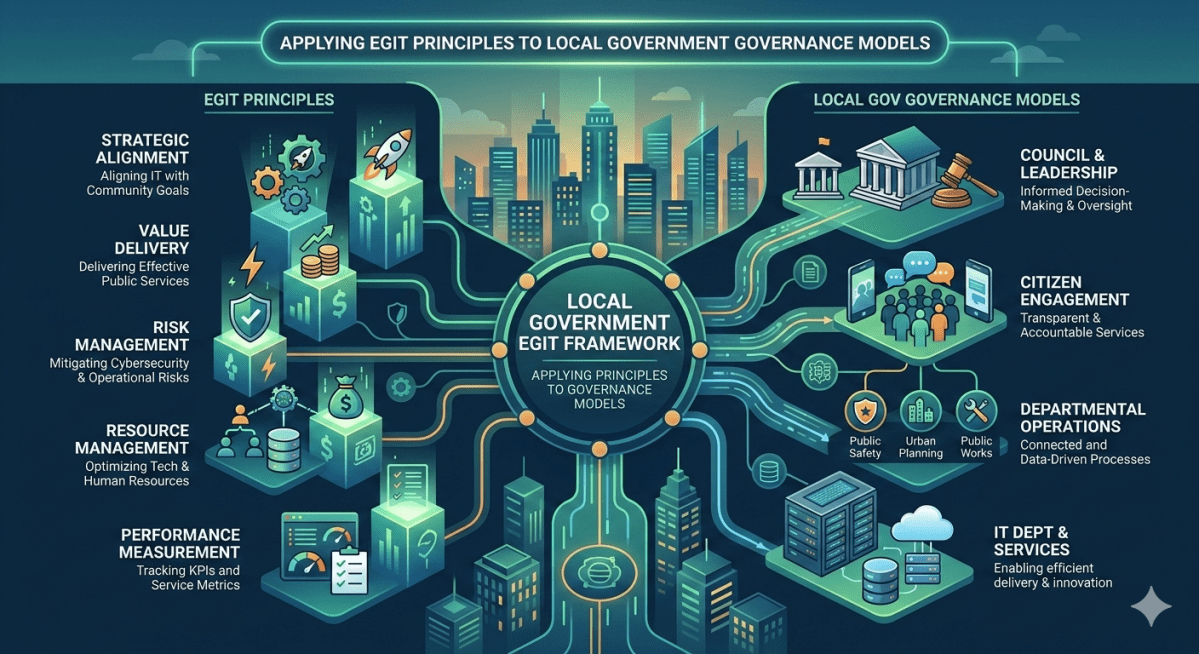
Applying EGIT Principles to Local Government Governance Models

As local governments embrace digital transformation, they face a dual challenge: delivering efficient, citizen-centered services while managing the growing risks of operating in a digital-first environment. One essential model for supporting this shift is the Enterprise Governance of Information and Technology (EGIT) framework. EGIT enables municipalities to align technology investments and digital service delivery with broader goals such as resilience, transparency, and public trust 

At its core, EGIT emphasizes two interdependent responsibilities:

  • Delivering value to the public through the effective use of data and digital tools.
  • Managing risk, including cybersecurity, as an integral part of governance.

To operationalize these principles, local governments can explore example governance models that support strategic alignment across departments.


Model 1: Risk-Informed Leadership Structure

This model integrates EGIT by embedding cybersecurity and digital risk into executive decision-making. Department heads and elected officials receive regular briefings on technology risks, and cybersecurity leaders participate in strategic planning sessions.

EGIT Application:

  • Risk is treated as a governance issue, not just a technical one.
  • Technology decisions are evaluated for both service impact and risk exposure.
  • Cybersecurity leaders have a seat at the table, ensuring independent risk assessments.

Model 2: Functional Separation of IT and Cybersecurity

EGIT calls for a clear distinction between IT operations and cybersecurity oversight. In this model, IT teams focus on service delivery and infrastructure, while cybersecurity teams independently assess threats, monitor compliance, and guide risk mitigation.

EGIT Application:

  • Prevents operational demands from compromising security.
  • Enables unbiased risk reporting and prioritization.
  • Supports resilience by ensuring that security is not subordinated to convenience or cost.

Model 3: Departmental Alignment Through Governance Councils

This model establishes a cross-functional governance council that includes representatives from IT, cybersecurity, finance, legal, and public services. The council reviews technology initiatives, evaluates risk, and ensures alignment with strategic goals.

EGIT Application:

  • Promotes transparency and shared accountability.
  • Aligns digital investments with community priorities.
  • Facilitates coordinated responses to emerging threats.

Model 4: Citizen-Centric Digital Service Oversight

EGIT emphasizes delivering public value. This model focuses on measuring the impact of digital services—such as online permitting, emergency alerts, and citizen portals—against metrics like accessibility, equity, and trust.

EGIT Application:

  • Uses data to evaluate service performance and user satisfaction.
  • Ensures that digital tools enhance—not hinder—public engagement.
  • Balances innovation with privacy and security protections.

EGIT is more than a framework—it’s a mindset. By applying EGIT principles to governance models, local governments can build structures that support innovation while safeguarding public assets. Whether through leadership integration, functional separation, or cross-departmental alignment, EGIT helps municipalities navigate the complexities of digital transformation with confidence and clarity.